
.png)
.png)
As fleets scale, operations become less about individual spacecraft and more about managing a living, evolving constellation. Assets move in and out of service. Orbit data gets refreshed. External systems must stay in sync.
This release is focused on giving operators tighter control, better visibility, and more confidence across the entire lifecycle.
Dynamic Asset Management
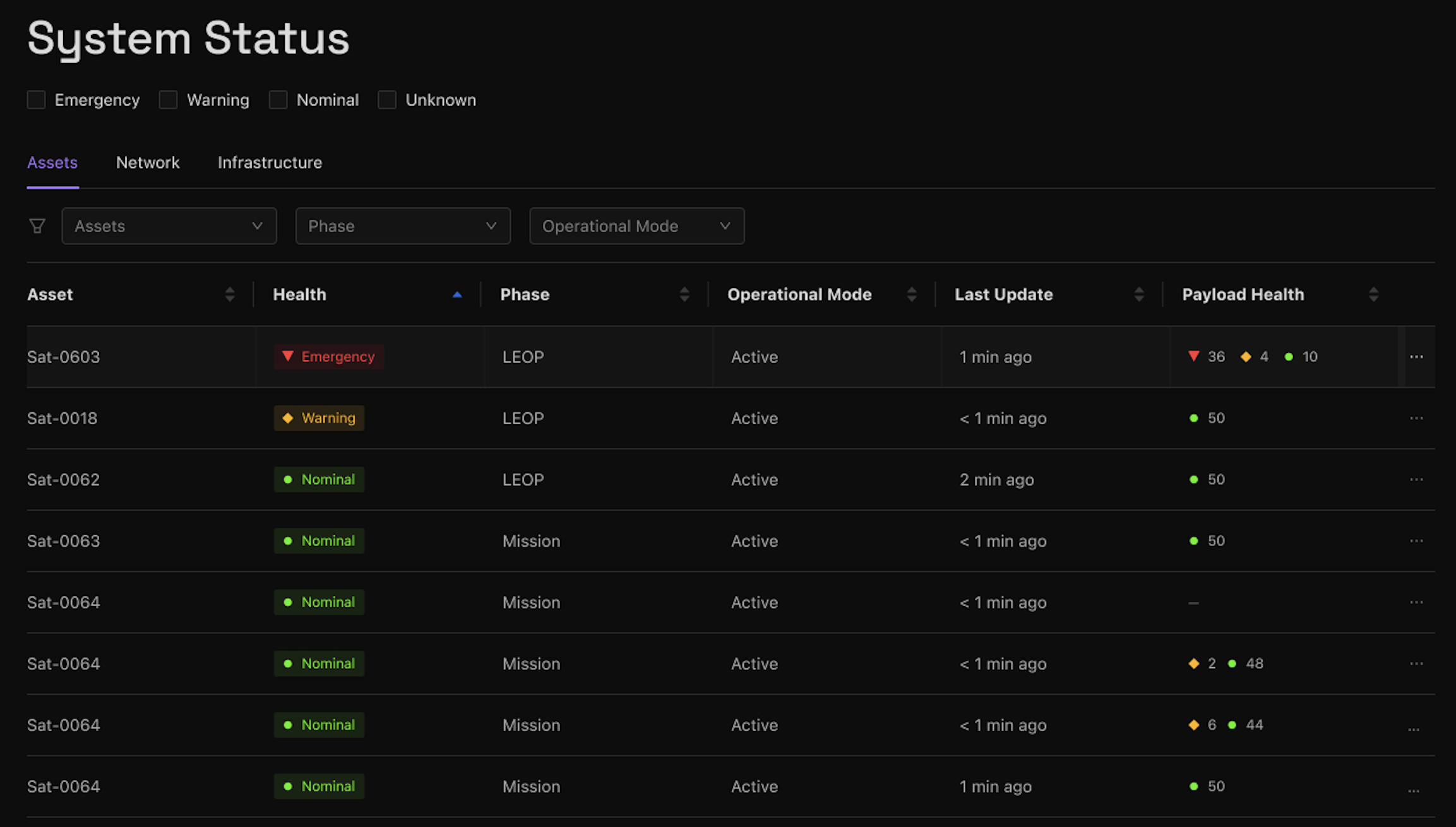
Assets move in and out of operational status for many different reasons. Today, keeping operational status accurate often requires manual intervention and constant oversight.
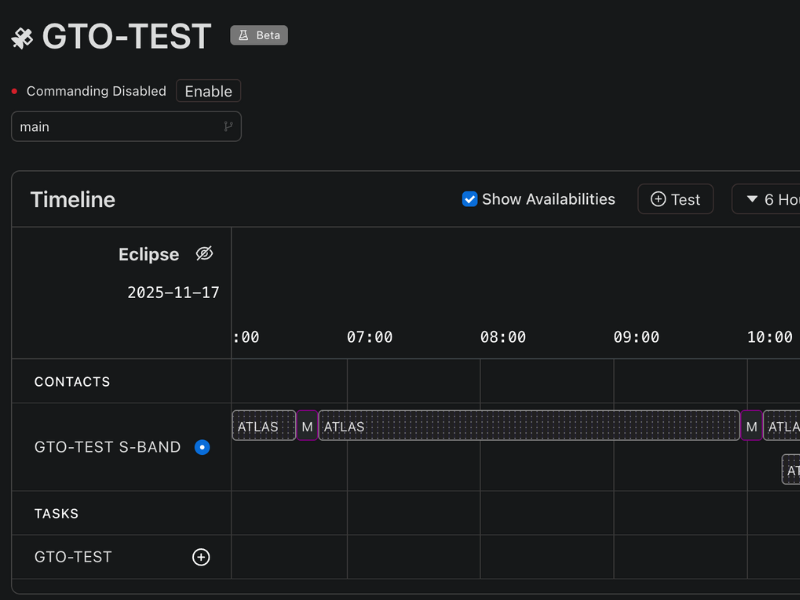
With these enhanced Asset Management capabilities, operators can automate the addition and removal of assets based on monitored events or telemetry. If an asset becomes permanently non-operational, then it can be archived while maintaining flight heritage data for posterity. Aggregated payload status is also shown for each asset, giving you a full picture of the asset health.
After recovery actions are completed, the asset status automatically returns to operational. This means fewer manual adjustments for operators and a constellation view that accurately reflects what’s happening in orbit, in real time.
Redesigned Flight Dynamics
With the redesigned Flight Dynamics module, Orbit Determination, Propagation, and TLE Management now live in a single, consolidated experience. Operators can review flight dynamics data for each individual spacecraft, with clear visibility into TLE epoch age, recency, and sync status.
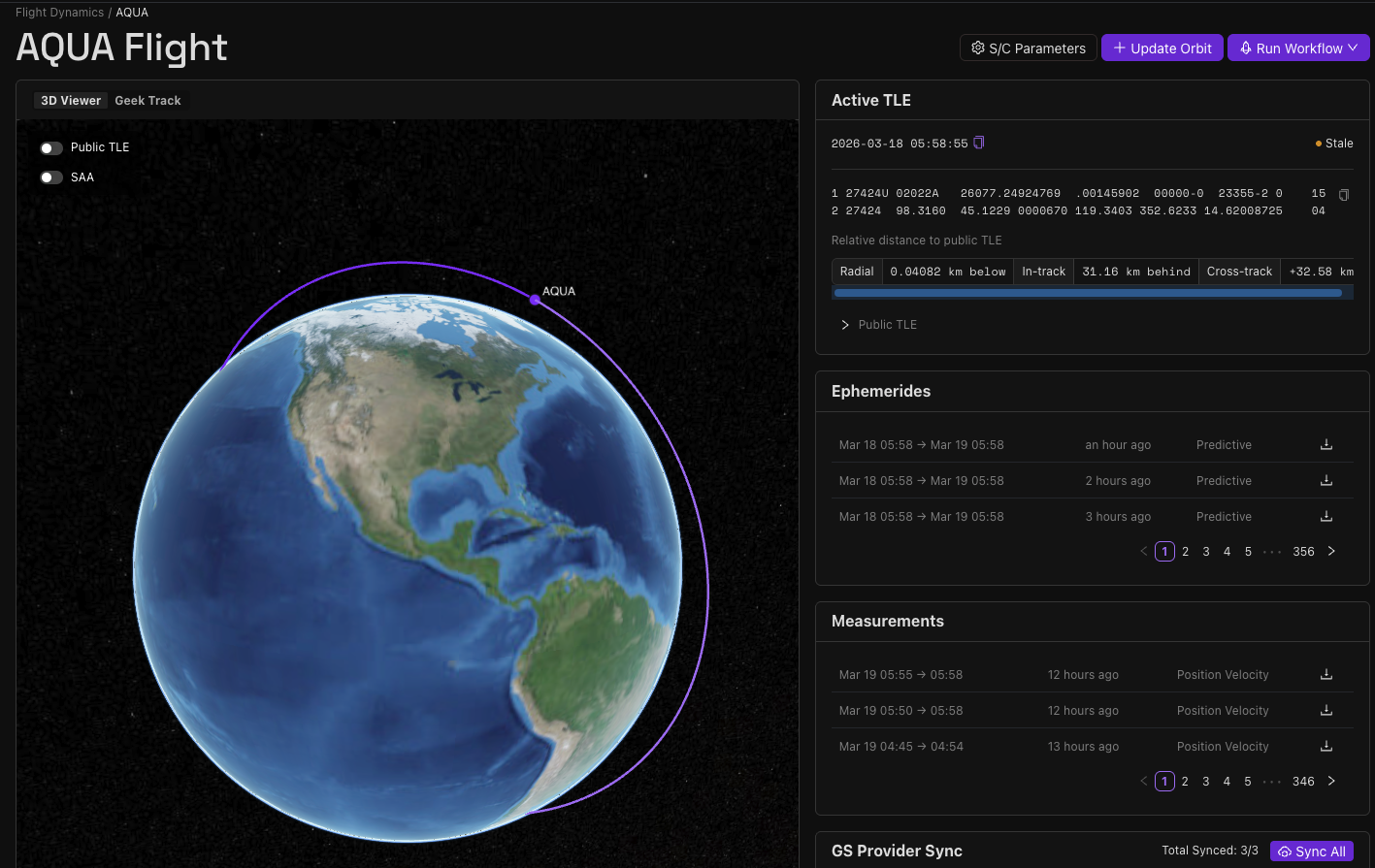
TLE management is now more flexible and streamlined. Operators can copy and paste (with automatic parsing), upload files, or fetch directly from Space-Track. Additional improvements include uploading files to support Orbit Determination runs and the ability to visually compare historical and active TLEs in a 3D viewer.
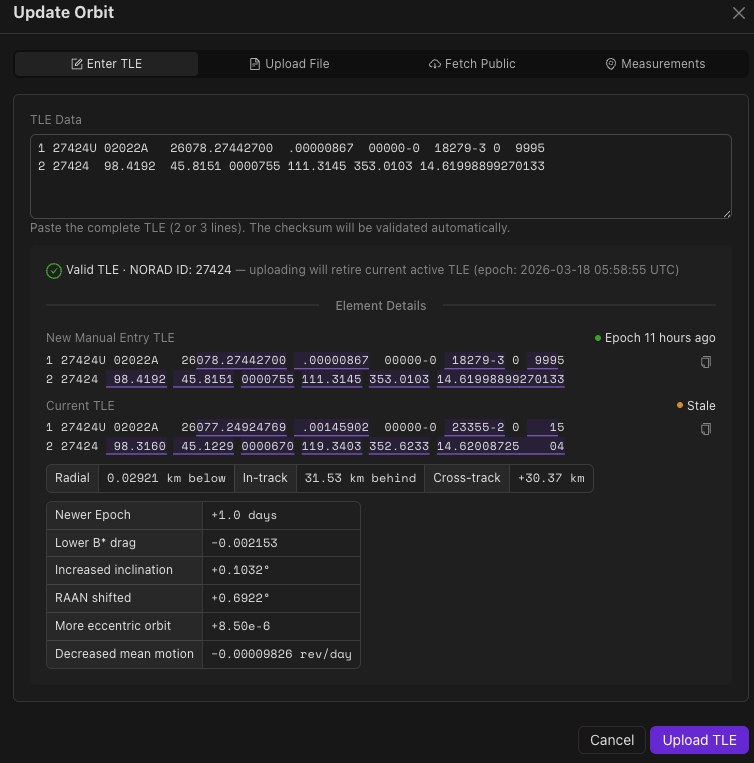
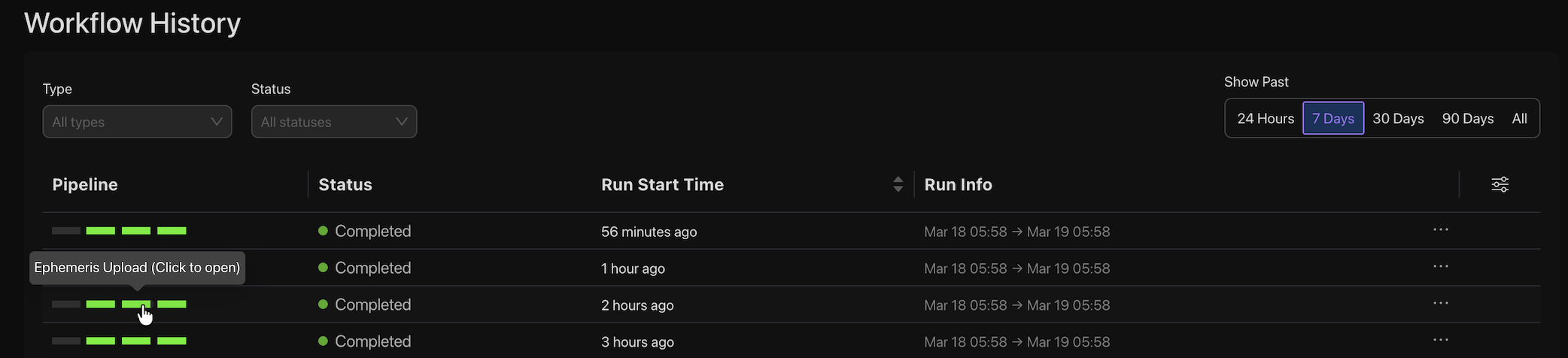
The result is fewer disconnected steps, less context switching, and a comprehensive understanding of orbit health at any given moment. Operators can move through flight dynamics workflows with greater confidence, knowing the full lifecycle is visible in one place.
Improved PVT Measurements for Orbit Determination Workflows
Orbit Determination is only as good as the data behind it, and critical position, velocity, and time (PVT) measurements are often scattered across different systems. With this release, Quindar now supports persisting time-tagged PVT measurements directly in our platform. These are stored per asset and are accessible through the ephemeris service, which creates a consistent, reusable source of truth for Orbit Determination workflows.
Smarter Automation for More Confident Operations
This release is about reducing operator oversight through smarter automation and a more unified operational experience. Operators can spend less time on manual intervention and more time focused on mission strategy. The result is smarter decision-making, faster execution, and greater confidence in day-to-day mission operations as fleets continue to grow and evolve.

Stay ahead of the curve
Subscribe to our blog to get updates straight to your inbox.
%20(3).png)
.png)
.png)


%20(1).png)

.png)


